Boeing/GP Strategies Building a Scalable, Quality-Driven Instructional Design Process
Learning Strategy · Process Improvement · Program Management · Quality Assurance
When I joined GP Strategies to support Boeing's Joint Programs department, the instructional design team lacked consistent processes for developing, reviewing, and maintaining curriculum. Stakeholders had no clearly defined responsibilities or project timelines, and many existing courses no longer aligned with Boeing's operational procedures and health and safety requirements.
The department also lacked a formal onboarding process for new Instructional Systems Designers (ISDs), creating challenges in establishing consistent expectations and practices across the team.
I saw an opportunity to establish a more structured, scalable approach that would improve efficiency, strengthen accountability, and support consistent training quality.
The Challenge

As a Senior Instructional Designer and Team Lead, I led the development and implementation of standardized instructional design workflows, project documentation, and quality assurance procedures.
I also redesigned the ISD onboarding guide, established a structured approach to subject matter expert (SME) engagement, and introduced Jira to improve project visibility and accountability.
My Role
My Approach
1. Standardizing the Instructional Design Lifecycle
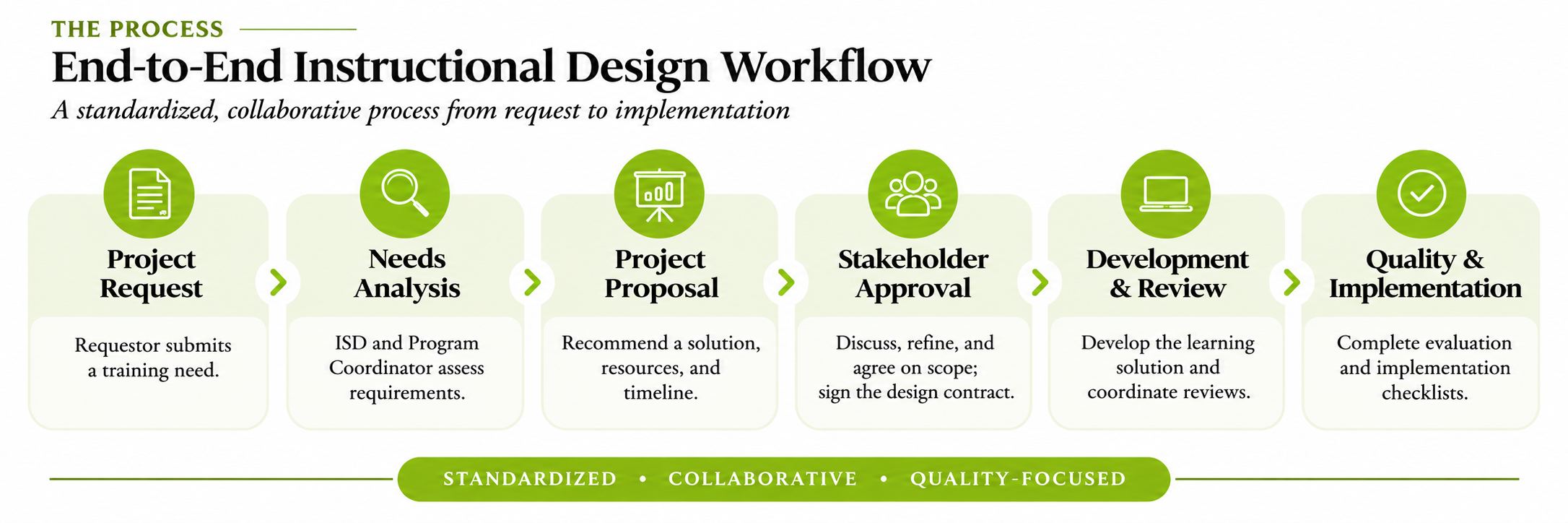
I developed an end-to-end process that guided projects through intake, needs analysis, solution design, stakeholder approval, quality review, and implementation.
To support this process, I created standardized templates and documentation, including project request forms, needs analysis templates, project proposals, design contracts, and evaluation and implementation checklists.
These resources clarified responsibilities, established approval checkpoints, and created consistent expectations for everyone involved.
2. Improving Project Visibility and Accountability
I introduced Jira to track project timelines, coordinate reviews, share documentation, and monitor progress.
The platform gave stakeholders a centralized view of responsibilities, decisions, and deadlines, making it easier to identify bottlenecks, follow up on outstanding tasks, and escalate issues when necessary.
3. Strengthening Team Onboarding and SME Collaboration
I rewrote the ISD Onboarding Guide to reflect the updated workflows, clarify responsibilities, and explain how instructional designers contributed to the broader Joint Programs department.
I also established a structured approach to recruiting, engaging, and recognizing SMEs. I created and maintained a centralized database that tracked their expertise, availability, communication preferences, and previous contributions to support more effective collaboration.
4. Integrating Quality Assurance into the Process
I incorporated formal review checkpoints and standardized evaluation tools to support compliance with instructional design standards and applicable Boeing requirements.
These procedures helped the team review course quality, verify requirements, and prepare completed materials for implementation more consistently.

The new processes improved operational efficiency, project transparency, and accountability across the department.
Key outcomes included:
Reduced average project time by 30% through standardized workflows and improved project management practices.
Clarified project responsibilities, timelines, and stakeholder approvals through consistent documentation.
Increased visibility into project status, outstanding tasks, and escalation needs.
Strengthened quality assurance through standardized review practices and evaluation tools.
Improved onboarding resources for new ISDs.
Streamlined SME collaboration processes.
The Impact

This project reinforced my belief that effective learning and development requires more than high-quality instructional content. By establishing clear processes, strengthening collaboration, and building accountability into the learning lifecycle, I helped the department develop and maintain technical training more efficiently and consistently.
Key Takeaway